
Why Uruguay? Why Piriápolis?
If you have been researching a move abroad, Uruguay has probably come up. It tends to appear near the top of “best countries for expats” lists, and for good reason — but the reasons are worth understanding rather than just accepting on faith. And once you have decided on Uruguay, the question of where to actually land is one that deserves just as much thought.
Why Uruguay
Uruguay is not the flashiest destination in South America, and that is part of what makes it work. It is a small, stable, secular democracy that has quietly built one of the most livable societies in the hemisphere. It consistently ranks as one of the least corrupt and most peaceful countries in Latin America. Its institutions work. Its people are warm and unhurried. And its cost of living, while not as low as some destinations, is significantly more affordable than the United States or Canada, particularly for housing, food, and healthcare.
Healthcare deserves special mention because it is often what stops people from making the move. Uruguay has both a public healthcare system and a network of private providers called mutualistas, which offer comprehensive coverage for under USD $200 per month in most cases. In-home doctor visits, specialist access, and prescription medications are all dramatically more affordable than in North America. For anyone making a retirement or semi-retirement decision, this matters enormously.
Residency is straightforward by international standards, but requires paperwork and patience. Uruguay welcomes newcomers without a lot of bureaucratic hostility, and the income requirement for residency is lower in practice than what you will often read online.
The country is also simply beautiful with a long Atlantic coastline, rolling interior grasslands, excellent wine, abundant fresh food, and a culture that takes its time in all the best ways.
Why Piriápolis
Uruguay has no shortage of appealing towns, but Piriápolis has a combination of qualities that is genuinely rare. It is small enough to be walkable and human-scaled — you learn your way around in a day and start recognizing faces within a week. It is architecturally distinctive, having been designed in the early twentieth century by an eccentric entrepreneur named Francisco Piria who built a grand hotel, a castle on the hill, and a promenade along the water. The bones of his vision are still visible, giving the town a character that most beach towns simply do not have.
It is also affordable relative to Punta del Este, which sits 30 minutes away and offers access to international medical specialists, an international airport, high-end shopping, and cultural life without requiring you to pay Punta del Este prices to live. Montevideo, the capital, is 90 minutes in the other direction, with everything a major city offers.
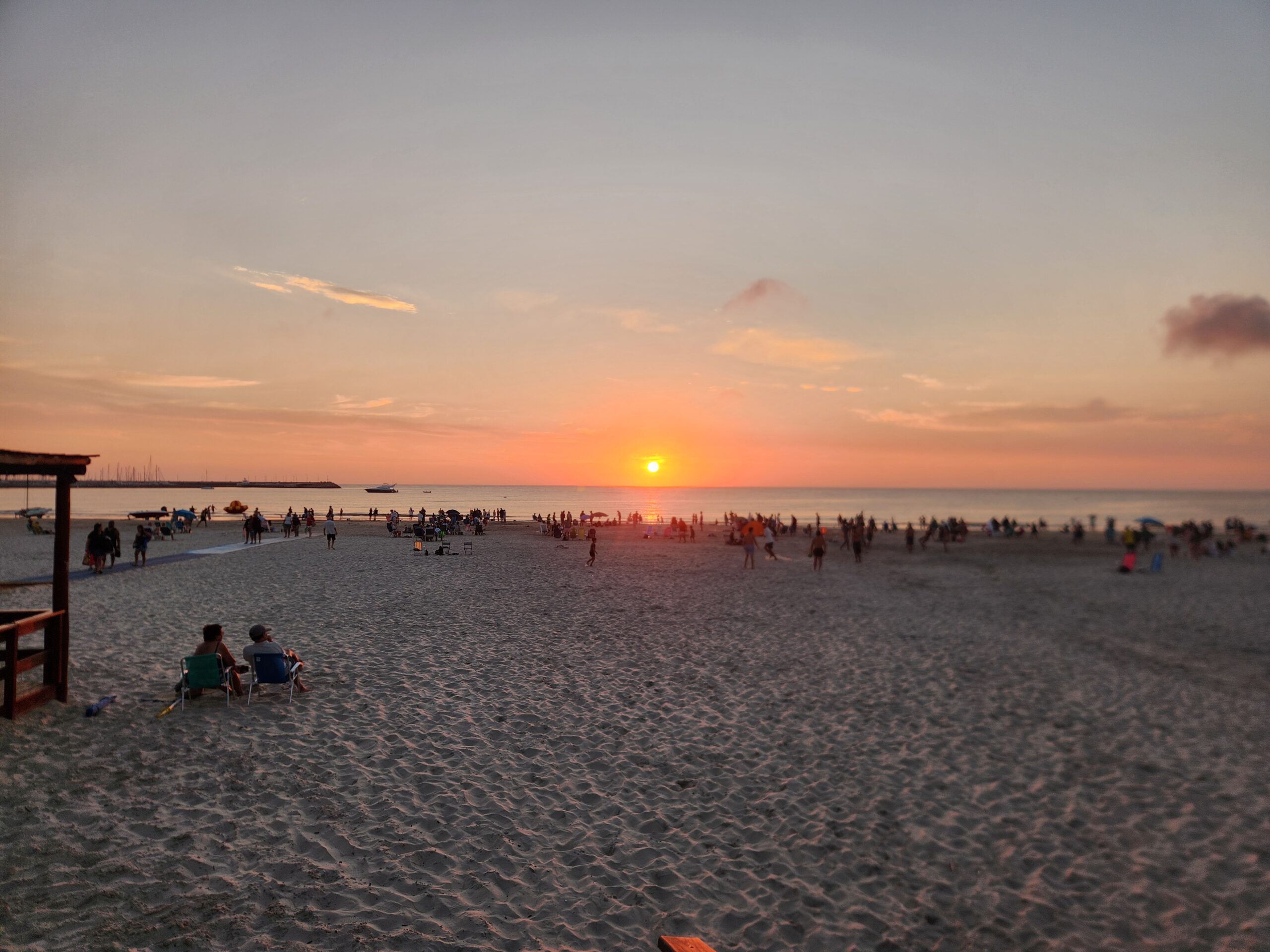
The expat community in Piriápolis is real, connected, and growing. There are year-round residents from the United States, Canada, Europe, and beyond — people who have made the same leap and are generally happy to share what they have learned. The town has restaurants, markets, pharmacies, and everything needed for ordinary daily life, all within walking distance of most neighborhoods. The beach is wide and beautiful. The hills behind town are perfect for walking. The sunsets are the kind that make you stop whatever you are doing.
For someone considering a move to Uruguay, Piriápolis offers something that larger cities cannot: a genuine sense of community, a manageable scale, and a pace of life that reminds you why you wanted to make this change in the first place.
Ready to Learn More?
If you are in the early stages of researching a move to Uruguay, this free resource is a good place to continue: Choosing Your New Home — Piriápolis Expats
And if you are ready to stop researching and start experiencing, The Piriápolis Experience is designed exactly for that.